

Braised Easter Bunny
This year, we decided to host Easter at our house, and I finally had my excuse I needed to braise a rabbit and purchase a meat cleaver.
I knew that it wouldn’t be for everyone, but that’s part of cooking and I also grilled some chicken for those that couldn’t stomach eating the Easter Bunny.
Rabbit is an old-world food. It deserves time, patience, and respect to be done correctly.
I wanted a braise that honored that tradition while still using modern techniques. This is what I landed on.
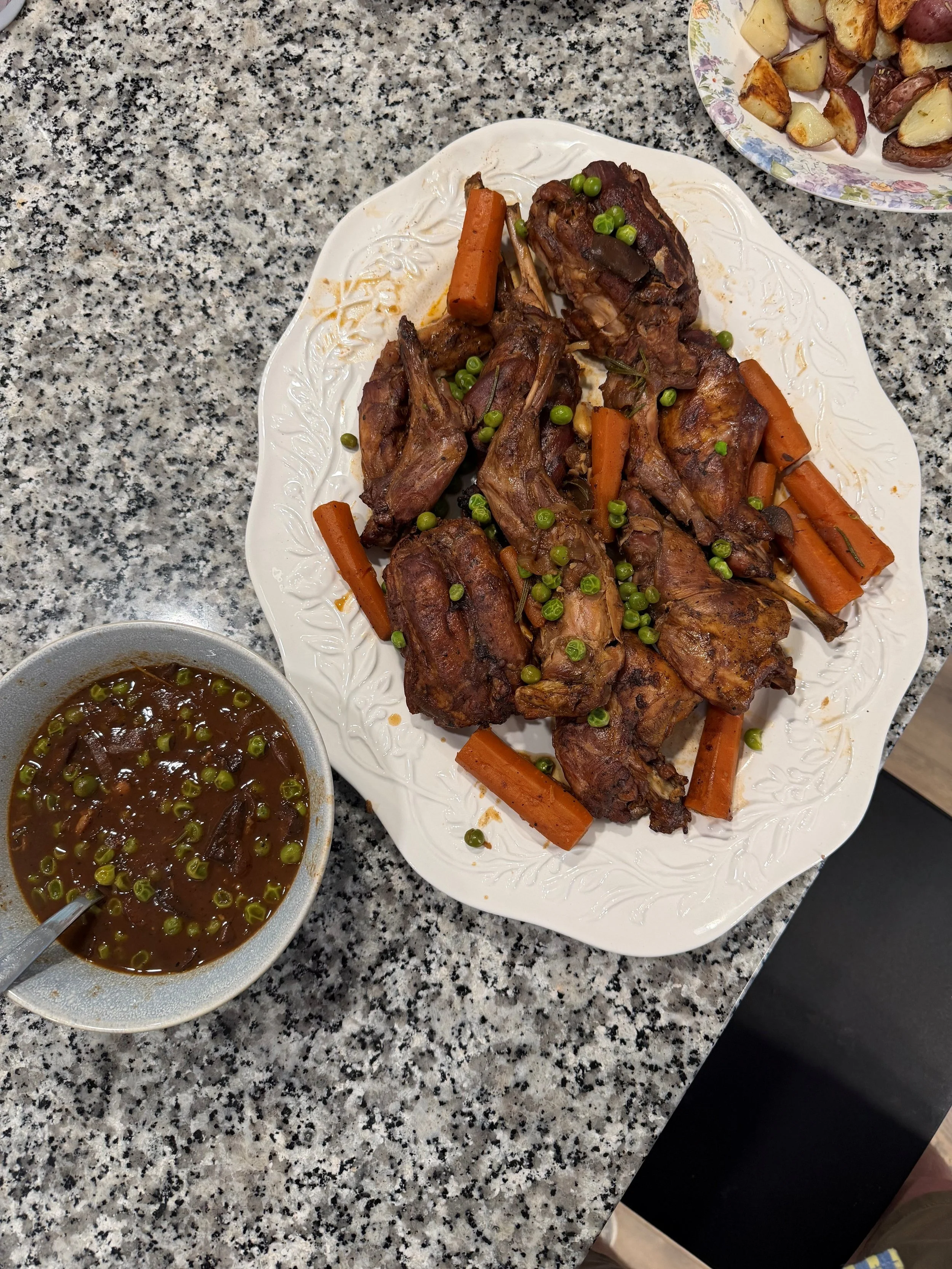
Ingredients:
- 2 whole rabbits (broken down)
- 3-4 tbsp olive oil
- Salt & black pepper (to taste)
- 1 large yellow onion (sliced)
- 4-6 garlic cloves (crushed)
- 1.5 cups cremini mushrooms (sliced)
- 4-5 large carrots (peeled and chunked)
- 2 tbsp tomato paste
- 1.5 cups dry red wine
- 1.5-2 cups chicken stock
- 1 bay leaf
- 2-3 sprigs thyme
- 1 sprig rosemary
- 1 cup frozen peas
Instructions:
Preheat oven to 325°F.
Pat the rabbit dry with paper towels and season generously on all sides with salt and black pepper.
Heat olive oil in a Dutch oven over medium-high heat until shimmering. Sear the rabbit in batches, without overcrowding, until deeply browned on all sides (about 3–4 minutes per side). Remove and set aside.
Reduce heat to medium. Add sliced onions and cook 5–8 minutes, stirring occasionally, until softened and slightly golden. Add mushrooms and cook until they release their moisture and begin to brown.
Stir in garlic and cook 1–2 minutes until fragrant. Add tomato paste and cook for 2–3 minutes, stirring constantly, until it darkens slightly and loses its raw edge.
Pour in the red wine, scraping up any browned bits from the bottom of the pot. Let it simmer for 3–5 minutes to reduce slightly.
Add carrots, stock, bay leaf, thyme, and rosemary. Return the rabbit to the pot. The liquid should come about halfway up the meat.
Bring to a gentle simmer, cover, and transfer to the oven. Cook for about 2.5 hours, flipping the rabbit halfway through.
The rabbit is ready when the meat is tender and easily pulls from the bone.
Remove the lid during the last 30 minutes of cooking to allow the sauce to reduce and thicken slightly.
Stir in peas during the last 5–10 minutes. Taste and adjust seasoning with salt, pepper, and a splash of vinegar or lemon juice if needed.
Not everyone of our guests was sold on the rabbit, and that’s fine.
Cooking like this isn’t about playing it safe - It’s about trying something that’s been done for generations and seeing it through.
In the end, it came together exactly how I wanted. rich, simple, and done right.