

Cast Iron, Butter, and Southern Roots
Growing up in the South, cast iron wasn’t some trendy piece of cookware that people collected for kitchen photos that they could plaster on social media. It was just a part of life.
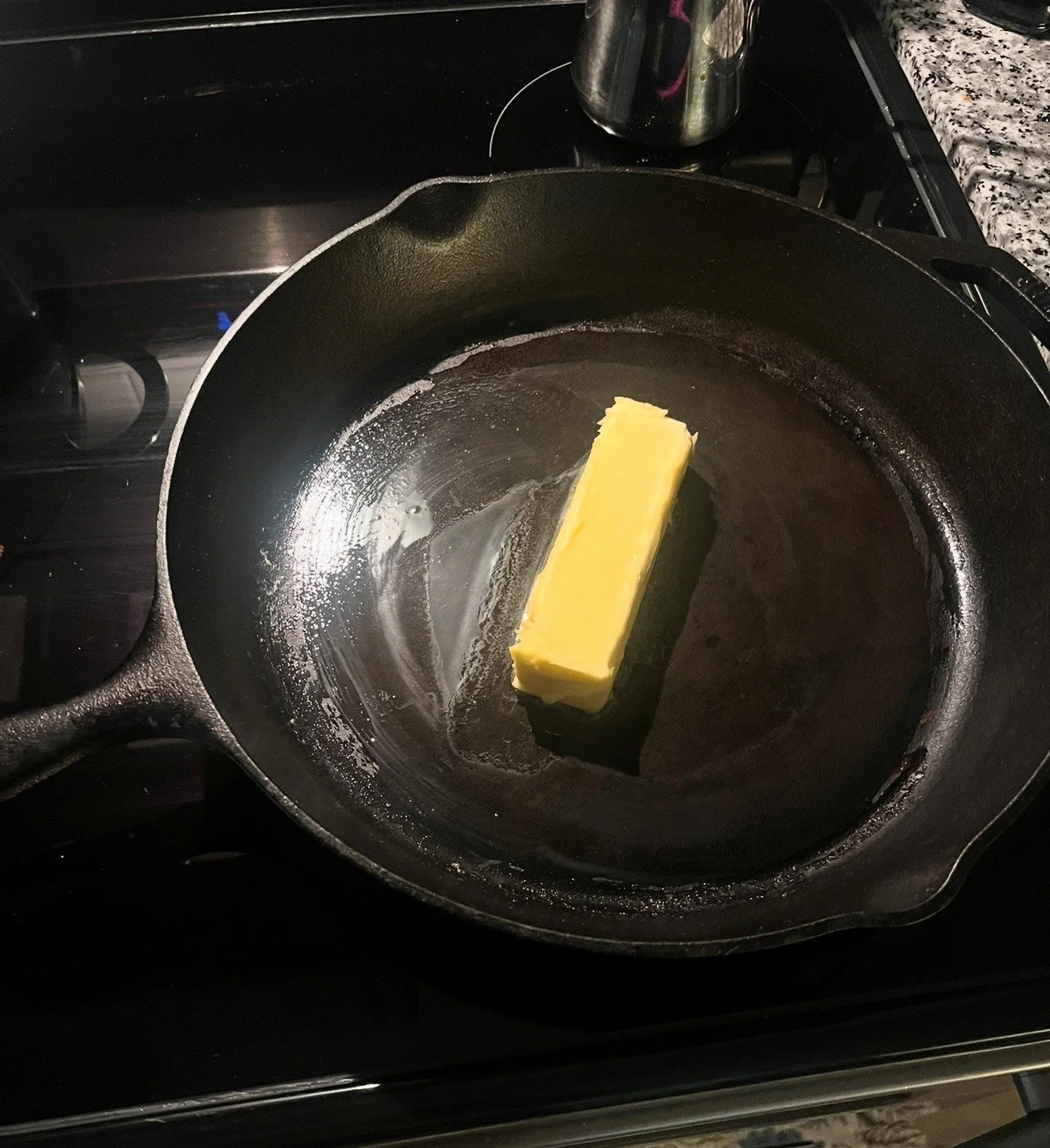
I remember visiting my grandmother’s house and always seeing her giant cast iron skillet on the stove. It was always there. Seasoned black from years of use, sitting on one of the back burners, ready to be used at a moment’s notice.
Thinking back, it is possible that this was the only pan that my grandmother ever used. I remember cooking with her in the kitchen, and she always told me that this skillet made food taste better. The older I have gotten, the more I understand why.
My cast iron skillet stays on the stove too. On a back burner. Just like grandma’s.
Not because it looks good sitting there, but because out of all of my pans, it is normally the one I reach for and it gets used the most. I could use it to cook up some eggs and sirloin in the morning, steak or chicken thighs for dinner, or even whip up a batch of cornbread in the oven.
Somewhere along the way, without even realizing it, I adopted the same habits my grandmother had.
A cast iron skillet on the stove feels normal to me. It feels lived in. Ready. Like a kitchen that actually gets cooked in.
And honestly, I think cast iron represents something much bigger than cooking.
In a world where everything feels disposable, cast iron demands maintenance. You take care of it. You season it. You clean it properly (by hand). You don’t just throw it away and buy another one when it gets rough around the edges.
The skillet changes over time, and so does the person that cooks with it.
There is also just something different about cooking with cast iron.
It forces you to slow down. You can’t rush heat. You can’t throw cold meat into a cold skillet and expect greatness. Over time, you stop relying on timers and start learning how to cook by instinct, just like our ancestors did.
Sound. Smell. Heat.
The skillet becomes part of the cooking process instead of just something dinner cooks on.
And the food genuinely tastes better.
A steak develops a harder sear. Chicken skin crisps properly. Vegetables caramelize instead of steam. Cornbread gets those dark edges that almost taste fried.
But what I appreciate the most about cast iron is the maintenance.
After cooking, you clean it while it is still warm. Dry it completely. Wipe it down with a little oil before putting it back on the stove.
That maintenance becomes ritual. Another family meal in the books.
Over time, the seasoning builds layer by layer until the skillet develops that dark black surface that only comes from years of use.
Every meal adds to it.
Mine never gets put away. It stays right there on the stove. Seasoned from years of cooking and waiting for the next meal. Just like my grandma’s.