

Carbonara: The Correct Way
If my wife and I are craving a traditional Italian dinner, I often turn to carbonara.
It’s one of the simplest dishes you can make… and one of the easiest to ruin.
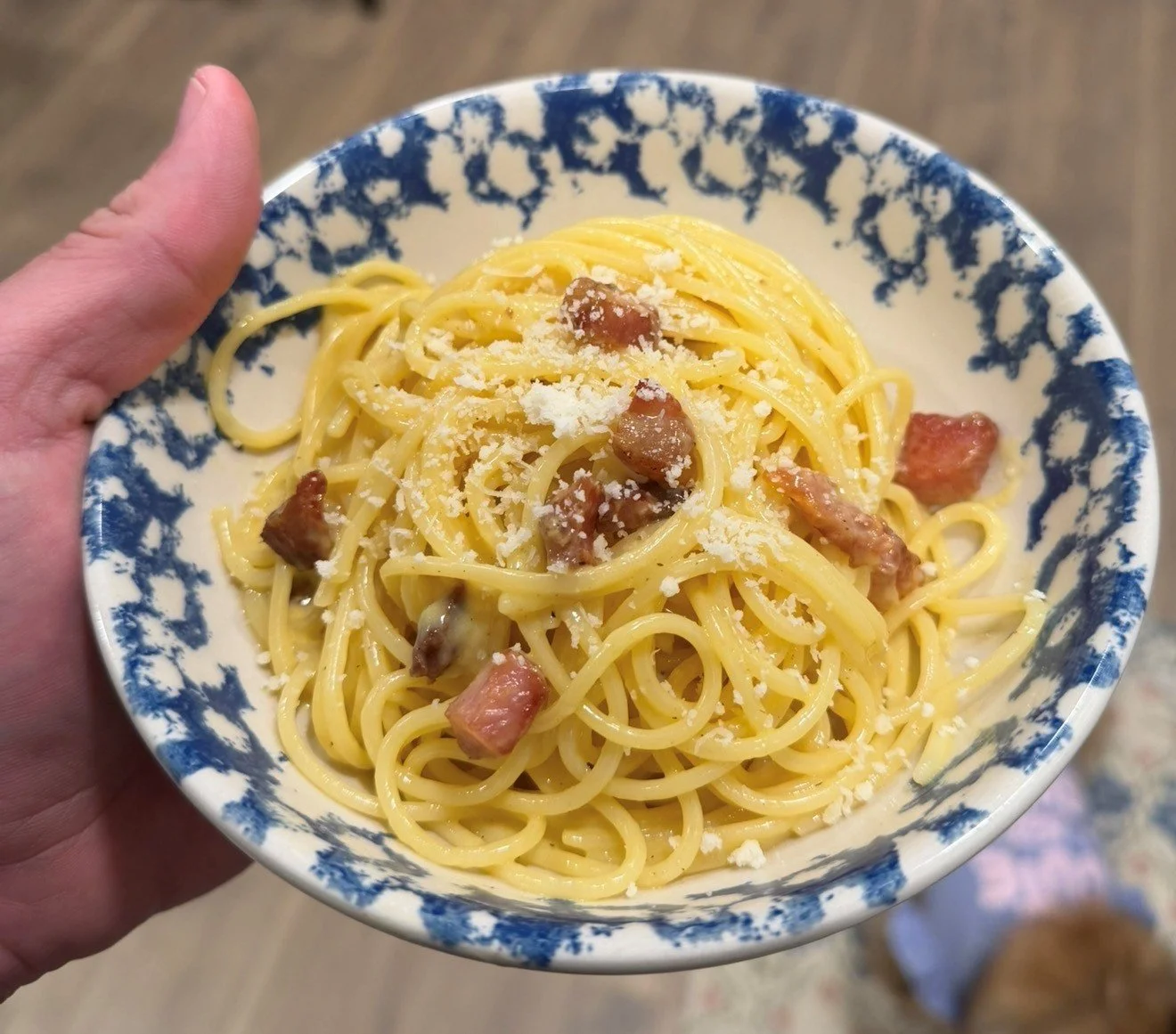
There are two kinds of people in this world:
Those who make carbonara correctly, and those that make a bacon alfredo pretending to be carbonara.
Which can still be tasty.
Just not a carbonara that your nonna would be proud of.
Traditional carbonara doesn’t need heavy cream. It doesn’t need flour, onions, garlic, or a jar of “sauce” from the grocery store.
The sauce for carbonara comes from eggs, cheese, pasta water, and rendered pork fat emulsifying into something silky and rich
Simple ingredients.
Technique matters.
If your heat is too high, you end up with scrambled eggs. If your pasta is too dry, the sauce becomes glue. If you skip the pasta water, the sauce never comes together at all.
Carbonara rewards patience over complexity.
Choosing Your Pork
Traditional carbonara uses guanciale, which is cured pork jowl. Kind of an odd part to think about eating, but it has a rich flavor and a high fat content that melts beautifully into the sauce.
I normally get mine from my friends over at Revival Butchery. If you can find it locally, it’s absolutely worth trying at least once.
If you cant find guanciale, or just cant get over the hump of eating pig cheek, pancetta is the next best option and actually what I used to make carbonara with primarily, since it is normally readily available at grocery stores. It still gives you that salty cured pork flavor without drifting too far away from the traditional version.
Then there’s bacon.
Which is where some people get angry.
Bacon is smoked, while guanciale and pancetta are typically cured without smoke. that smoky flavor, while delicious, changes the dish noticeably.
If bacon is all that you have access to though, it can still make an excellent pasta.
Just understand that the closer you move towards bacon and heavy cream, the further you move from a traditional carbonara and closer to a bacon alfredo.
Still delicious.
Just a different dish.
Choosing Your Cheese
Traditional carbonara uses Pecorino Romano cheese, and for good reason.
It’s sharp, salty, and melts into the dish differently than Parmesan. The bite from the Pecorino is part of what gives carbonara its identity.
Parmesan can still work, especially if that’s what you already have in the refrigerator, but the flavor becomes milder and less aggressive.
Some people even use a blend of both Pecorino Romano and Parmesan to balance the sharpness.
What matters most is using freshly grated cheese.
Pre-shredded cheese usually contains anti-caking agents that not only keep the cheese from sticking together in the bag, but also keep it from melting smoothly into the sauce. This can make a noticeable difference in the final product.
Carbonara only has a handful of ingredients.
Every single one matters.
Ingredients: (2-3 servings)
8 oz spaghetti
4-6 oz guanciale, pancetta, or thick cut bacon
1 whole egg
3 egg yolks
1 ½ cups freshly grated Pecorino Romano
Fresh cracked black pepper
Salt for pasta water
Instructions:
Bring a large pot of salted water to a boil and cook the spaghetti until it is just shy of al dente. Before draining, reserve at least one cup of pasta water.
While the pasta is doing its thing, ad the guanciale or pancetta to a large skillet over medium heat. Slowly render the fat until the meat becomes crisp. Do not rush this step. The rendered fat is part of the sauce.
In a bowl, whisk together egg, egg yolks, cheese, and a generous amount of black pepper until it’s smooth.
Add the hot pasta directly into the skillet with the rendered pork fat and toss to coat evenly.
Remove the skillet from the heat completely.
Slowly pour in the egg and cheese mixture while continuously tossing the pasta. Add small splashes of the reserved pasta water as needed until the sauce becomes glossy and silky. If your pan is too hot, congratulations. You just made breakfast pasta.
Finish with more cheese and black pepper.
Final Thoughts
Carbonara is proof that simple food still requires technique.
No cream. No shortcuts. Just timing, heat control, and a handful of ingredients working together the way that they were meant to.
Which is probably why this dish has survived as long as it has.